

PRIVATE INVESTIGATOR ROQUEBRUNE-SUR-ARGENS
Private Investigator in Roquebrune-sur-Argens Enquiries – Surveillance – Investigations – Evidence
Illustration of an investigator near the Roquebrune-sur-Argens town sign.
Surveillance & Field Investigations · Private Investigator in Roquebrune-sur-Argens
ROQUEBRUNE-SUR-ARGENS · 83520 · Cannes office

Private Investigator in Roquebrune-sur-Argens

Surveillance and private investigations in Roquebrune-sur-Argens for individuals, businesses and solicitors. Our Cannes office coordinates your case.

Immediate response · Free quote · Advice tailored to your case

CNAPS licensed Cannes office
Director trained in law 10 years of experience
Investigation reports For your lawyer
Professional secrecy Strict confidentiality
Tailored investigations · Var (83)

Our private investigation services in Roquebrune-sur-Argens

Our investigators document facts for family and business cases in Roquebrune-sur-Argens. Explore our surveillance, mobile observation and address tracing services.

Individuals

Family, assets and loved ones

Adultery and divorceView serviceClose

What the investigation can establish

Objective evidence of infidelity and breaches of marital duties under Article 212 of the French Civil Code can support a fault-based divorce case before a family court judge.

A targeted investigation can document journeys, meetings or circumstances observable in public places to inform your lawyer’s case. The report draws a clear distinction between verified observations and assumptions.

How the investigation works

  1. Agree the relevant facts with your lawyer and assess the locations in advance.
  2. Make lawful observations in places accessible to the public.
  3. Provide a dated chronology and the relevant photographs.

What you receive

Your lawyer can assess whether to submit the findings as evidence. In divorce proceedings, evidence obtained through violence or fraud is excluded.

Child custodyView serviceClose

What the investigation can establish

Where there is a legitimate interest, a proportionate enquiry can help locate a parent or establish repeated failures to comply with contact or overnight arrangements.

How the investigation works

  1. Review the existing order or judgment.
  2. Identify the specific events that need checking.
  3. Make discreet observations with due regard for the children.

What you receive

The report sets out when the events took place and in what circumstances. Your lawyer can assess their relevance to your family case.

Child maintenanceView serviceClose

What the investigation can establish

Evidence of undeclared work, a concealed standard of living or an openly established cohabiting relationship can support a request to review child maintenance or a compensatory payment on divorce.

Lawful enquiries into employment or apparent undeclared activities can help document an application to review child maintenance or a compensatory payment.

How the investigation works

  1. Cross-check information from public and lawfully accessible sources.
  2. Verify the facts on the ground.
  3. Bank accounts and protected tax records are outside the scope of the enquiry.

What you receive

The report sets out the facts gathered about activities or apparent living standards, for consideration alongside the other evidence.

Tracing a personView serviceClose

What the investigation can establish

We use records and on-site checks to verify addresses for debtors, heirs or missing relatives where there is a legitimate reason for the enquiry.

A tracing enquiry can help locate a beneficiary of an estate, a debtor or a relative where there is a legitimate family reason for making contact.

How the investigation works

  1. Review the identifying details and leads you provide.
  2. Search records through lawfully accessible sources.
  3. Verify the identified address in person.

What you receive

You receive an account of the checks and their outcome. Whether an address can be disclosed depends on the reason for the request and the applicable data protection requirements.


Businesses

Operations, employees and assets

Suspected sick leave abuseView serviceClose

What the investigation can establish

We conduct proportionate checks into suspected paid work or work for a competitor during sick leave, alongside any independent medical assessment.

When an employer has specific indications of a breach of loyalty, an investigation can document suspected paid work or work for a competitor.

How the investigation works

  1. Review the need for the enquiry with the employer’s lawyer.
  2. Make non-intrusive observations from outside, without collecting any medical information.
  3. Date and cross-check observations in a factual report.

What you receive

Seeing someone go out or take part in an activity does not establish misuse of sick leave. The report describes what happened. The company’s lawyer assesses its significance.

Unfair competitionView serviceClose

What the investigation can establish

We document diversion of customers, large-scale poaching of employees or breaches of a non-compete clause in Roquebrune-sur-Argens and in the surrounding Cannes area.

We gather dated observations and tangible evidence to help the company’s lawyer prepare an application for an evidence-gathering order or bring a claim before the commercial court.

How the investigation works

  1. Define precisely which facts need documenting.
  2. Carry out field enquiries into observable business approaches.
  3. Keep a clear record of the evidence and provide a detailed report.

What you receive

The report distinguishes the approaches actually observed from the initial suspicions so your lawyer can assess the available options.

Internal theft and fraudView serviceClose

What the investigation can establish

We investigate missing goods, misappropriation of equipment and falsified expense claims in accordance with the French Labour Code.

Document a specific incident, such as misappropriated goods or losses in the supply chain, within a defined scope and without general or indiscriminate monitoring of staff.

How the investigation works

  1. Define the scope of the investigation.
  2. Make targeted observations in line with employment law.
  3. Provide a chronological report that your lawyer can use.

What you receive

The findings focus on the identified irregularities and are presented chronologically within the scope agreed in the engagement.

Commercial disputesView serviceClose

What the investigation can establish

We investigate solvency before legal action, verify assets and trace addresses for company directors or debtor companies.

Verify whether a business is operating, whether it has a physical presence and which facts may help with negotiations or debt recovery.

How the investigation works

  1. Conduct detailed research using documents and lawful sources.
  2. Carry out checks on site.
  3. Cross-check the findings and summarise the facts.

What you receive

The summary distinguishes verified facts from outstanding questions. It can inform negotiations or debt recovery.

Legal professionals

Evidence gatheringView serviceClose

What the investigation can establish

We prepare detailed, dated reports supported by photographs for use in court, in accordance with Article 9 of the French Code of Civil Procedure.

We plan the investigation around the facts to be established and the documents already on file, then provide the client with a chronological report.

How the investigation works

  1. Discuss the background to the dispute.
  2. Agree a precise and proportionate scope of work.
  3. Provide a chronological report with photographic exhibits.

What you receive

The report distinguishes direct observations from information that still needs checking. The client may authorise us to send it to their lawyer.

Pre-trial investigationsView serviceClose

What the investigation can establish

Preliminary investigations can support an application under Article 145 of the French Code of Civil Procedure, for example for a court-authorised formal record by a judicial officer.

We work alongside the judicial officer to provide verified background facts supporting a legitimate need to preserve or establish evidence before proceedings begin.

How the investigation works

  1. Identify the evidential issue.
  2. Gather observable facts using proportionate means.
  3. Prepare a structured factual summary for an application or interim proceedings.

What you receive

The report can help the lawyer assess whether to seek a pre-trial order. The judge decides whether to grant it.

Family casesView serviceClose

What the investigation can establish

Targeted surveillance and asset enquiries to support the law firms handling the case.

Support the lawyer’s strategy with precise observations that respect the privacy of those involved.

How the investigation works

  1. Agree the scope of work with the lawyer.
  2. Limit observations to the relevant facts.
  3. Keep a precise record of dates, times and places.

What you receive

Depending on the agreed scope, the report focuses on facts relevant to separation, the child’s residence or the parties’ financial means.

Employment disputesView serviceClose

What the investigation can establish

We gather relevant facts for French employment tribunal proceedings using proportionate means, in line with Court of Cassation case law.

Gather proportionate evidence for proceedings before an employment tribunal or commercial court.

How the investigation works

  1. Confirm the legal scope before starting work.
  2. Make targeted and dated observations.
  3. Provide a detailed report with supporting documents for the lawyer.

What you receive

You receive a chronology of the observations and the relevant exhibits. The judge assesses the admissibility and evidential weight of the report.

Free quote · VAT included

Transparent fees

Surveillance packages at the same rate for nights, weekends and public holidays.

Investigation fees in Roquebrune-sur-Argens

Tracing

Address tracing

Records search and on-site verification
€1,290 incl. VAT
Focused
10-hour package
Field surveillance
€1,290 incl. VAT
Extended
60-hour package
Field surveillance
€7,290 incl. VAT
What the package covers

Included in the package

  • Field surveillanceFieldwork carried out by a CNAPS-licensed investigator.
  • Preparation and site assessmentWe check access and prepare the fieldwork.
  • Case fee includedThe price includes the €90 case fee.
  • Travel includedMileage is included in the price.
  • No out-of-hours surchargeNights, weekends and public holidays are included.
  • Investigation report and exhibitsA detailed report and photographs for your lawyer

Terms

Minimum of 5 hours per assignment session.

Personalised quotes are available for longer investigations.

Testimonials · Google

Client reviews in Roquebrune-sur-Argens

Our Cannes office handles investigations in Roquebrune-sur-Argens. The Google rating is for this office. The testimonials are from the CONFIDENCIA network.

Google rating for our Cannes office

Testimonials from the CONFIDENCIA network

Credentials and CNAPS authorisation

The office serving Roquebrune-sur-Argens

The Cannes office coordinates investigations in Roquebrune-sur-Argens.

68 boulevard Carnot, 06400 Cannes

View our Cannes office

Retouched image of the CONFIDENCIA Investigations® private investigation agency at 68 boulevard Carnot, 06400 Cannes.

Benoit Avril

Agency director

LinkedIn profile
  • Law · Université de Nîmes
  • Management · École Nantaise de Commerce
  • Over 10 years’ experience · Speaks French and English
Registration and licences
SIREN753 071 109
Cannes SIRET753 071 109 00072
APE activity code8030Z — Investigation activities
CNAPS operating licenceAUT-006-2121-11-10-20220841107
Director’s licenceAGD-006-2027-05-18-2022571344
Professional cardCAR-006-2027-05-09-20220571344
Local coverage

Areas we cover in Roquebrune-sur-Argens

The Cannes office coordinates investigations in Roquebrune-sur-Argens, with attention to the locations and times relevant to each enquiry.

Local landmarks in Roquebrune-sur-Argens

Roquebrune-sur-Argens has several distinct poles: the village, La Bouverie and Les Issambres. The agency asks for the sector, the access and the niche concerned to avoid confusing remote places within the same municipality.

At the Garillans, the entries of a site are compared with the documents of the file. In the Issambres, an announced route around San Peere is examined from public routes, without turning a possible route into a demonstrated presence.

Neighbourhoods

  • Le Village
  • La Bouverie
  • Les Issambres
  • Les Garillans
  • Palayson
  • Raphèle
  • Les Quatre Chemins
  • San Peïre
Guidance and examples

Resources

How to prepare your enquiry and what to expect from an investigation report.

Investigation reportsTwo fictional cases in Roquebrune-sur-Argens

These are fictional scenarios. The photographs illustrate the actions and situations described.

Workplace investigationSuspected abuse of sick leave in Roquebrune-sur-ArgensRead the reportClose the report

Fictional observation · Les Garillans · 07:15–12:35 · 5 h 20 min

Background and instructions

This fictional scenario concerns a control of the movements of equipment in the Garillans sector in Roquebrune-sur-Argens. An undertaking requests to document an intervention attributed to a sick-lined employee, the supporting documents of which remain incomplete. The Cannes agency sets an observation period from 07:15 to 12:35. The agency must report on visible facts from public roads, without crossing private access or presuming that any object moved belongs to the customer's order. The visuals illustrate an invented chronology and do not represent any real company.

Chronology

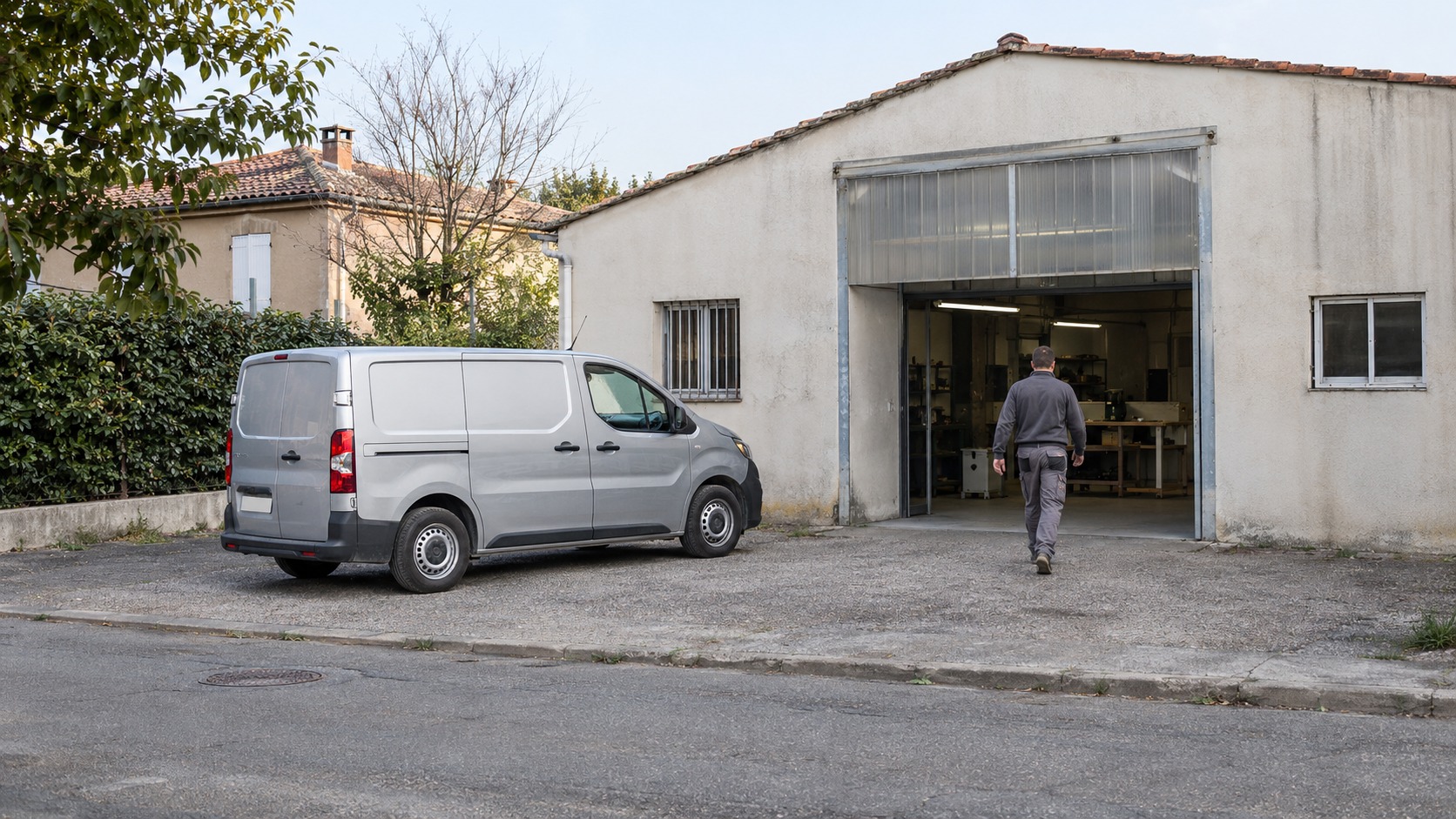
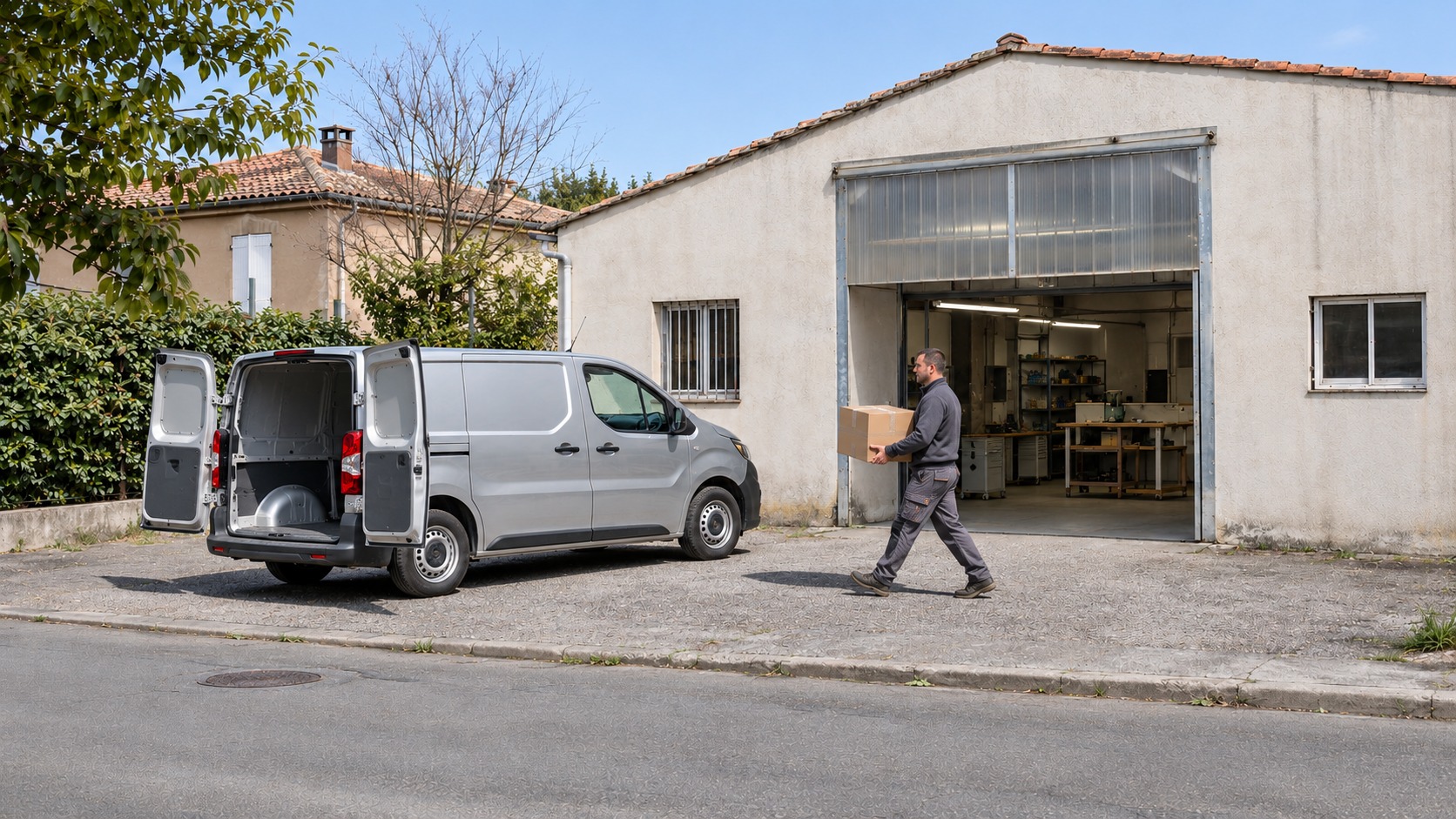
  1. 07:46

    Arrival of the true

    A van joins the chosen area. His driver descends and then goes to the load. The statement shall indicate the time of such arrival and the point at which monitoring becomes possible. It does not provide information on the previous route. A presence in the area is not sufficient to identify the client served or the exact content of the intervention announced.

    Fictional case illustration: A van parked outside a workshop.
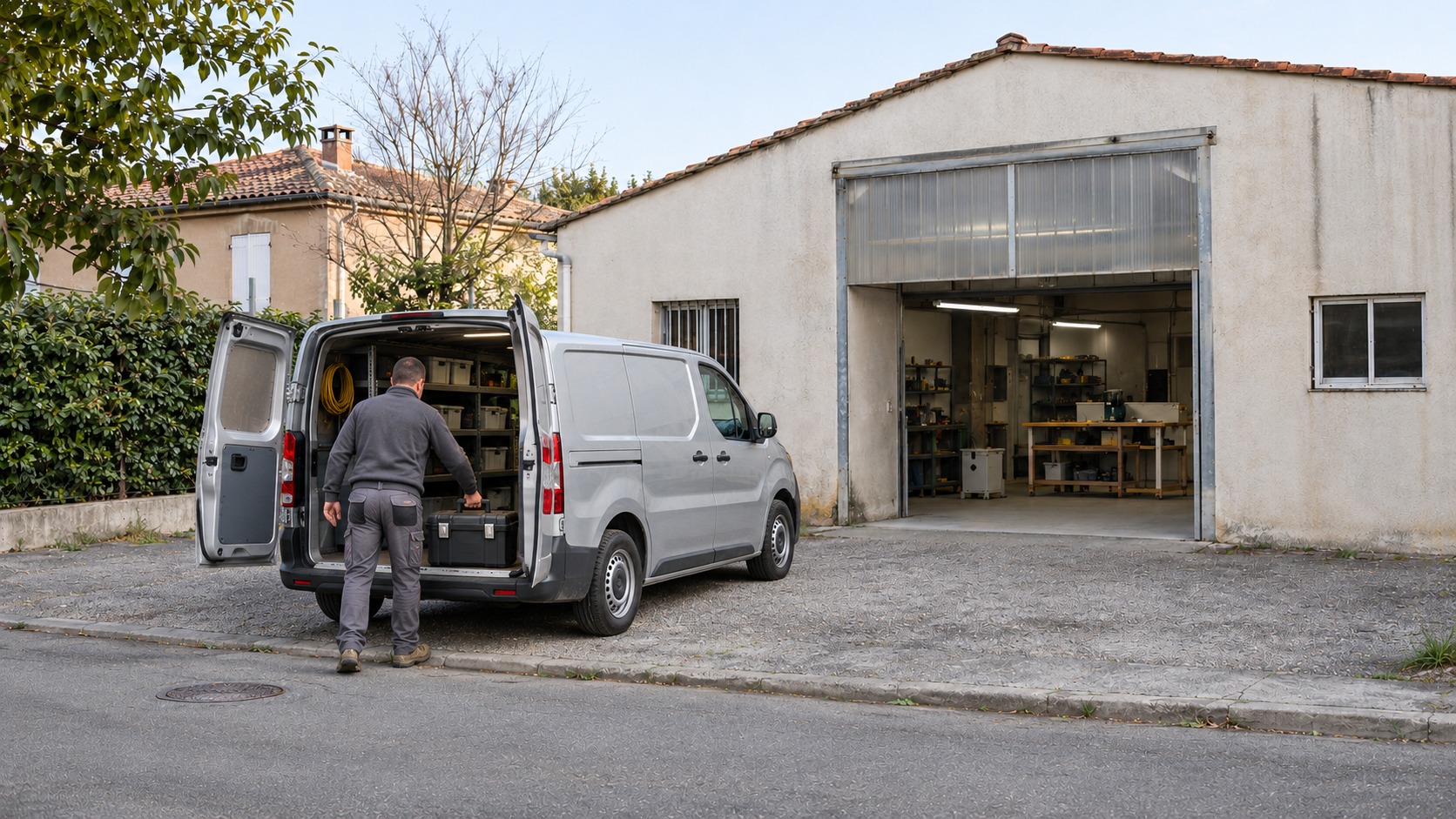
  2. 08:34

    Opening of the load

    The man opens the back doors and prepares several elements. The scene is visible from a public access, without allowing the reading of precise references. The agency distinguishes the observed preparation from a service whose content remains to be confirmed. No internal documents are consulted. The pedagogical photography illustrates the opening of the vehicle, without demonstrating the complete execution of an order.

    Fictional case illustration: Preparing equipment at the back of a van.
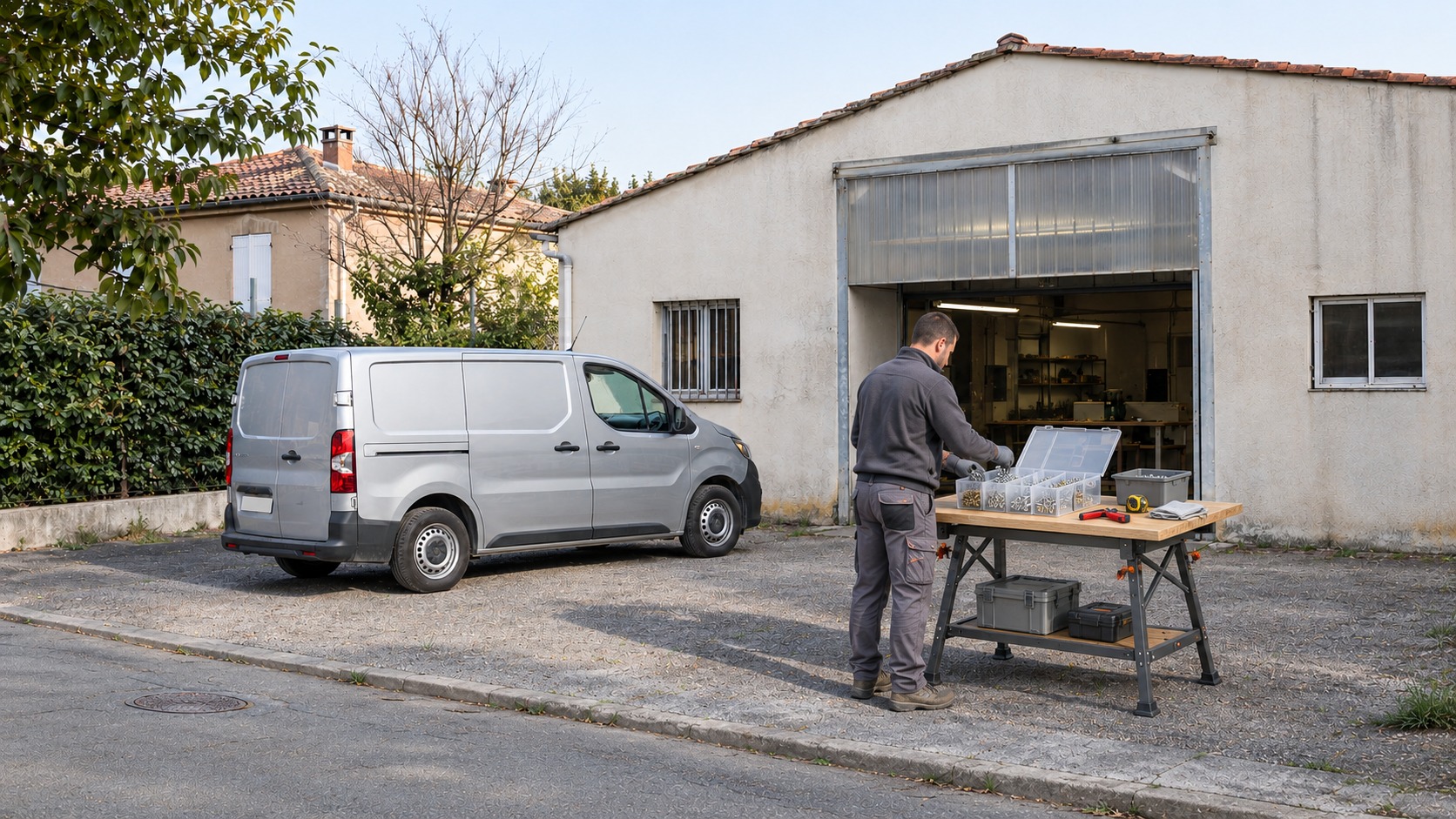
  3. 09:52

    Manipulation of elements

    The man wears gloves and handles small pieces. Gestures are noted at the moment when they are visible; intermediate periods are not assimilated to continuous work. The technical result of the operation remains unknown. The report does not establish only the documents corresponding to the customer's invoice and does not assign them any non-readable reference.

    Fictional case illustration: Sorting small parts while wearing gloves.
  4. 11:16

    Transport of packaging

    a closed cardboard box is moved over a short distance. The content and weight remain undetermined. The end of the movement is partially masked, which does not make it possible to identify a receiver. The agency describes this limit without concluding a complete discount. An illustrative image of cardboard worn cannot replace proof of a quantity or signed receipt.

    Fictional case illustration: Carrying a box to a van.
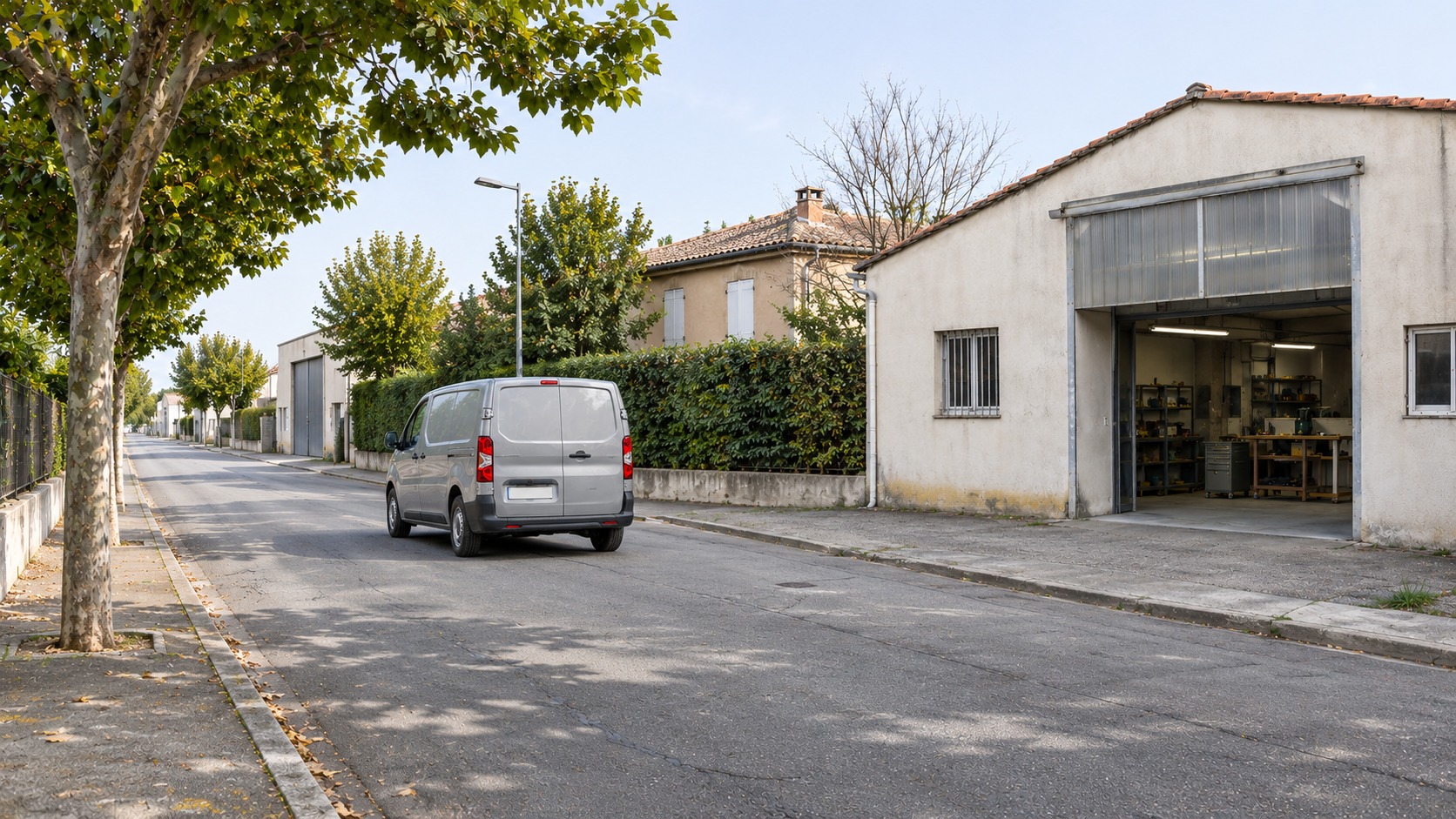
  5. 12:35

    Departure at the end of the slot

    The vehicle leaves at 12:35, ending at five hours and 20 minutes of observation period. The next destination is not part of the agreed follow-up. The notes distinguish the acts noted from the unrepresentative moments. The departure alone does not mean that the intervention has been completed or that all the equipment has been delivered.

    Fictional case illustration: A van leaving.

Findings

The fictional sequence shows steps compatible with preparation and displacement of equipment to the Garillans. It does not demonstrate that the customer's order was executed in full. The identity of the consignee, the references and the quantities remain to be reconciled with independent documents before any conclusion on a delivery or a service.

The report would be submitted with schedules, access conditions and identification limits. The client could request the precise supporting documents that are missing from the file and then assess the follow-up with his lawyer. No fraudulent intent is attributed to the intervener. The five photographs accompany only this invented example and are presented after the corresponding observations.

Family investigationSuspected infidelity in Roquebrune-sur-ArgensRead the reportClose the report

Fictional observation · Le Village · 17:05–22:25 · 5 h 20 min

Background and instructions

In this fictional example of a family file with suspicion of adultery, the client reports an appointment in the village of Roquebrune-sur-Argens. The Cannes agency prepares a follow-up from 17:05 to 22:25 to describe the visible steps. The perimeter is limited to the public spaces of the village and is not extended to the other poles of the commune without any observed new developments. Conversations and private places remain excluded. The chronology and the five illustrations are pedagogical, without reference to a case or real people.

Chronology

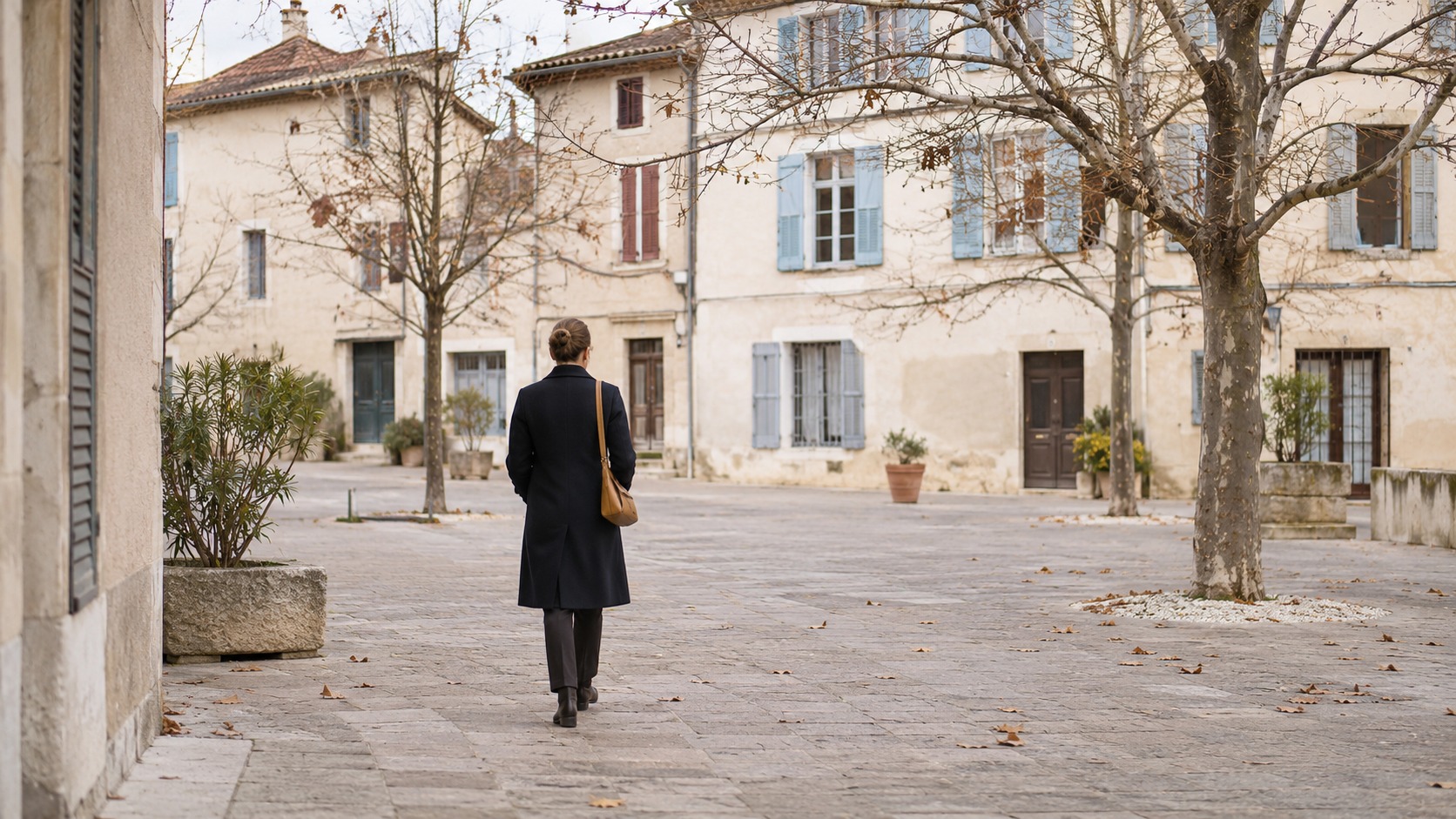
  1. 17:33

    Arrival on foot in the village

    A woman appears alone and then stops in the defined area. The first observation time shall be recorded, distinct from the beginning of the observation period. There is no information on its previous travel. The agency describes its presence without assuming that it is waiting for a particular person. Continuity of monitoring is based on visible benchmarks, not on private information requested from third parties.

    Fictional case illustration: Arriving on foot in a public place.
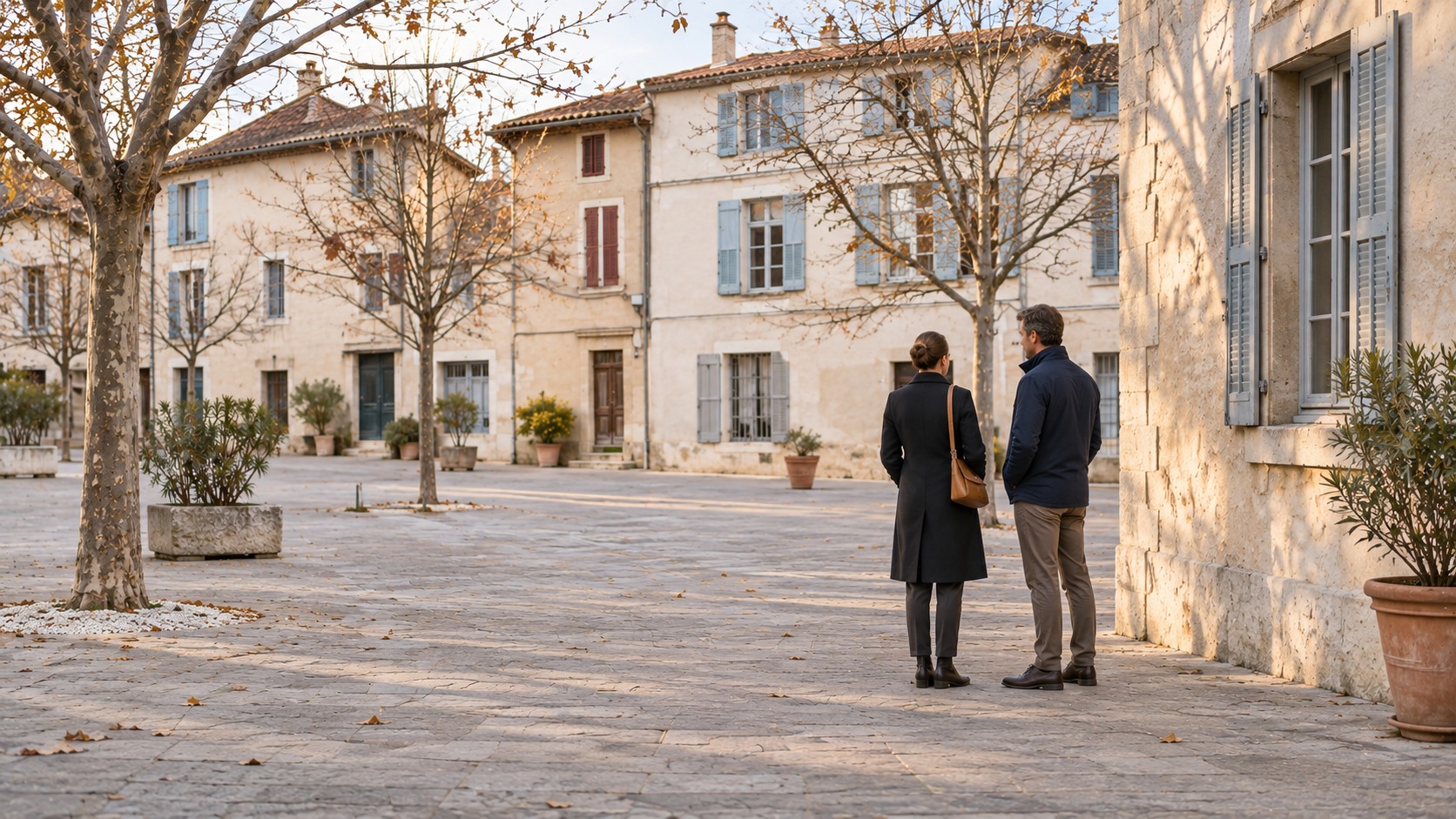
  2. 18:02

    Meeting

    A man approaches and joins the woman. They remain face to face during an exchange, the content of which cannot be heard. The report indicates that a meeting is taking place in the scenario, without qualifying its nature. It does not deduce a lasting link of one instant observed. The photograph illustrates this junction without adding any gesture absent from the description.

    Fictional case illustration: Two people meeting in a street.
  3. 19:06

    Common terrace presence

    The two people sit at an outdoor table. Visibility makes it possible to ascertain their presence, with short interruptions due to the environment. No statement or payment is transcribed when it is not directly perceptible. The non-visible steps are not reconstituted. The agency retains a description proportionate to the observation position, without presenting a simple image as continuous monitoring.

    Fictional case illustration: Two people seated at an outdoor table.
  4. 20:49

    March in the sector followed

    The woman and the man leave the table and walk together in the village. The reading relates to the path portions actually observed. No visit to another district of Roquebrune-sur-Argens is invented to complete the evening. Proximity to people during this walk is not sufficient to establish an emotional relationship, a common usual destination or a shared home.

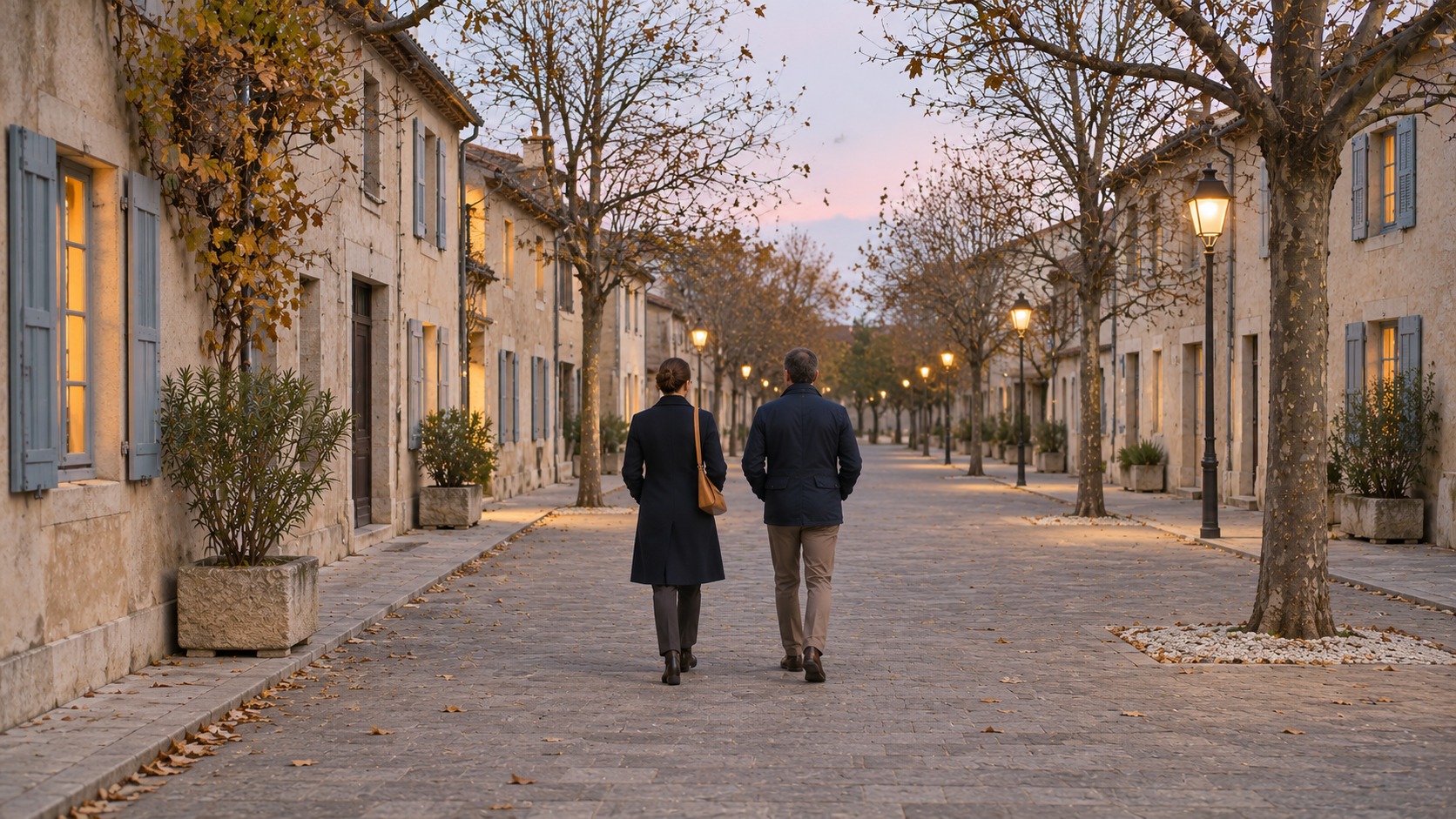
    Fictional case illustration: Two people walking together.
  5. 22:25

    Leaving together

    The two people join the same vehicle and each open a door. The departure closes the mission at 22:25, after five and twenty minutes. The next destination is not noted. The agency does not continue the description beyond the last visible step and does not turn this departure into proof of one night spent in the same place.

    Fictional case illustration: Two people leaving in the same car.

Findings

This example places in the village an arrival, a meeting, a terrace time and a departure in the same car. It remains limited to a party and does not show any habit. The periods of partial visibility are distinguished from the facts directly observed, so that the chronology does not suggest a precision greater than that of the findings.

Restitution would allow the client and his lawyer to bring these elements closer to other documents. No automatic conclusion on the relationship, intentions or address of residence is formulated. The photographs are generic and illustrative; they show how the text and the image can be ordered in a report, without providing evidence of a real investigation.

Use in court
In an actual case, the judge assesses the report’s admissibility and evidential weight in light of the circumstances, including the right to evidence and respect for privacy.

Frequently asked questionsInvestigations in Roquebrune-sur-Argens · Cannes office
Which package is recommended for an infidelity investigation?

For surveillance relating to suspected infidelity, the recommended package is 30 hours. The quote depends on the relevant time windows and how much surveillance is needed.

View fees and packages
How much does a private investigator in Roquebrune-sur-Argens charge?

Address tracing costs €1,290 including VAT. Surveillance packages cost €1,290 for 10 hours, €3,690 for 30 hours and €7,290 for 60 hours. All prices include VAT.

View fees and packages
Is it legal to hire a private investigator?+

Yes. Private investigation in France is regulated by the Internal Security Code (Article L. 622-9). You can engage an agency licensed by CNAPS to protect a legitimate interest.

Can an investigation report be used in court?+

Yes. A report may be submitted as evidence in civil, family, employment or commercial proceedings. The judge decides whether to admit it and what weight to give it, considering whether producing the evidence was indispensable and any interference with rights was proportionate (French Court of Cassation, 22 December 2023, no. 20-20.648).

What should I prepare for an investigation in Roquebrune-sur-Argens?+

To discuss an investigation in Roquebrune-sur-Argens, call us or arrange an appointment at ourCannes office. Note down the facts you want checked, the dates and locations you know and what you hope to establish. You do not need to send sensitive documents at this stage. If a lawyer is already assisting you, they can join the consultation.

What equipment does a private investigator use?+

Depending on the assignment, an investigator uses a notebook, a still camera or a video camera to document facts objectively from public space. The work must respect privacy under Article 226-1 of the French Criminal Code.

How soon can an investigation start in Roquebrune-sur-Argens?+

We confirm the first available time once we have reviewed the facts to be checked, the location and our availability. We give a separate timeframe for delivering the report.

Can my solicitor receive the investigation report in Roquebrune-sur-Argens?+

With the client’s consent, the agency can send the report and agreed exhibits to their lawyer. The report records the facts observed and the checks carried out.

Which office handles investigations in Roquebrune-sur-Argens?

The Cannes office coordinates investigations in Roquebrune-sur-Argens. Call us or arrange an appointment at our local office.

Can I contact you at weekends?

Yes. You can reach the director on Saturdays and Sundays, from 08:00 to 20:00, on 06 14 07 09 25.

NewsNews from our Cannes office
Unfair competition in Cannes: checking a claim of affiliation+

A supplier may offer services close to a trade fair or conference in Cannes.

At a glance

A difficulty arises when exhibitors understand that the organiser recommends or has appointed the supplier, even though no partnership has been approved.

Before considering unfair competition, establish which wording created that impression and who actually received the offer.

Preserve the exact wording of the offer

Record the words used. “Partner”, “official service” and a statement that the supplier is nearby convey different meanings. Keep the complete letter, attachments and available terms of sale, and record who supplied them and when. If a brochure, website and booking form differ, retain each version with its address. An isolated excerpt can omit a qualifying footnote or cross-reference.

Check the organiser’s stated channels

Collect the partner listing, logistics guide and list of approved services issued to exhibitors for that edition. Ask the organising team whether an agreement exists and what it covers. Permission to operate on site need not amount to a recommendation. A prior edition’s agreement might also explain some claims.

Describe the decisions influenced by the claim

Establish whether an exhibitor changed an order, paid a deposit or gave up the usual booking channel because of the presentation. For each voluntary report, record when the offer was received and which document links the decision to the disputed wording. Distinguish price differences from the impression of affiliation. Compare like services, periods and terms.

Define what needs independent verification

A private investigator in Cannes can examine accessible offers, their dates and the booking routes presented to exhibitors. Provide the programme for that edition, the originals and the organiser’s response. The report identifies statements located independently and those still based on someone’s account. Your lawyer can assess the organised evidence without inferring intent from a sales phrase alone.

Explore the CONFIDENCIA Cannes agency

Counterfeiting in Cannes: how to document suspicious sales+

Counterfeiting enquiries in Cannes address a recurring concern for businesses exposed to competition and imitation products.

At a glance

Similarities between two items alone do not establish an infringement.

Before taking action, a brand owner or shop should identify the alleged loss, the intellectual property right involved and events already documented.

Prepare the case file

Organise product descriptions, references, dates and suspected sales channels. Preserve lawfully obtained screenshots and documents with their sources. A customer’s statement offers a lead. Our Cannes agency considers which facts can be checked without presuming wrongdoing.

Identify useful observations

An observation may establish the conditions in which a product is sold, opening hours or information offered to the public. It must be proportionate and avoid staging an artificial situation. The investigator describes what was seen without claiming technical expertise that was never exercised. Whether this amounts to counterfeiting depends on the rights involved and the legal assessment.

Work within the legal framework

Keep photographs, invoices and files understandable after collection. Preserve originals, avoid retouching and note the limits of each finding. CNAPS explains the regulation of private investigation. Mere suspicion of an unlawful sale does not justify covert access to business email or a private stockroom.

Plan the assignment

A shop on La Croisette and a distributor in La Bocca may work to different schedules. Our Cannes fees allow a focused session to be planned. If events also involve Antibes, the Cannes agency coordinates the work. The engagement should specify locations, times and lawful methods.

Before funding an investigation, a director can ask a lawyer which evidence would be relevant to a claim and whether a less intrusive measure, such as a formal record, is available. A confidential enquiry allows us to assess feasibility and cost without promising an outcome.

Discretion in the luxury sector and in local retail requires precise observations. A case becomes clearer when each step addresses an identified question within the rules of evidence.

Limit the assignment to information relevant to the case. This helps control the budget and makes the final report easier for legal advisers to use.

An incident at a Cannes event: reconstructing a usable timeline+

An exhibitor reports that equipment was never returned.

At a glance

An organiser and a contractor disagree about when work took place.

These situations are difficult to reconstruct once the event teams disperse. Gather available records as soon as the job ends to clarify what each person saw and which further checks are possible.

Reconstruct equipment movements

Start with the delivery note and the set-up, opening and dismantling times. For each item, record its identifier, last confirmed location and who witnessed its movement. A photograph of the stand may provide a reference if its date and context are known. If a case was moved, look for instructions exchanged at the time and note differences between the schedule and actual events.

Collect separate, specific accounts

Ask each person to note the place, approximate time and what they personally saw. Distinguish direct observations from information received from a colleague. “I locked the room at about 19:15” is useful even when the exact time is unknown. Mark the uncertainty and cross-check it against attendance records, receipts and available work correspondence.

Decide where further checks may help

A venue operator, installation company and carrier may each hold different records. Identify the holder of each document and ask about the particular item and time window. A joint inventory may show that similar reference numbers were confused during collection.

Where equipment belongs to a client or hire company, check who holds the exact reference. Include the document stating where and when the item was due back.

Prepare the file for our Cannes agency

Provide the schedule, equipment references, relevant contacts and provisional timeline. Explain the disputed point and what you need to establish. This allows us to assess whether independent checks could clarify a particular stage of installation, handover or dismantling.

Explore the CONFIDENCIA Cannes agency

Due diligence in Cannes: checking a business before investing+

Buying a business, taking over its operations or acquiring an equity stake in Cannes can involve substantial sums.

At a glance

Even a persuasive sales presentation merits independent verification.

Due diligence helps clarify specific questions before signature, alongside the work of a lawyer or accountant. It can begin during early negotiations if the confidentiality of the discussions is protected.

Identify information that could affect the decision

List the sensitive points: the parties’ identities, the business’s physical presence, its public history, changes of name and the consistency of statements. Separate documented points from those requiring corroboration. Our Cannes agency assesses feasibility and proposes a scope suited to the transaction.

Carry out checks without disrupting negotiations

Use lawful sources to establish observable and verifiable facts. Confidential records and unauthorised access to computer systems are outside the brief. Depending on the case, check the business’s existence, location or apparent operations. Date and source discrepancies without speculating about intentions. Identify which information is public and which claims still need verification.

Put observations in context

An isolated anomaly does not establish fraud. Examine the circumstances, compare independent sources and let legal counsel assess its significance. The report distinguishes facts, unconfirmed information and the limits of the enquiry. We can coordinate with our Nice agency for assignments elsewhere in the Alpes-Maritimes. Consult the general fees before setting a budget.

Confidential and proportionate enquiries

Preliminary discussions should cover only what is necessary for the client’s legitimate purpose. CNAPS sets out the professional rules and authorisations for private investigators. Privacy and data protection remain essential, especially where several partners or intermediaries are involved. Findings go only to authorised recipients.

Prepare to make a decision

Due diligence reduces specific uncertainties and helps identify questions before commitment. Our article on organising a discreet investigation in Cannes explains the investigator’s role. A clear summary of checks and limitations helps decision-makers weigh the evidence.

Fictional case · Two entrances at Les Garillans

Situation and objective

In this fictional example in Roquebrune-sur-Argens, a return of material to the Garillans is the subject of two access descriptions. The right is a lane, while the carrier evokes the other side of the site. The customer wishes to check whether these particulars correspond to the same operation. The Cannes agency organises an analysis of the rooms before any targeted displacement.

Preparation of the dossier

The reference of the equipment, the date of return and the name of the consignee are compared on the available documents. The agency is looking for a delivery instruction or an access modification transmitted before the passage. It retains disagreements instead of immediately choosing a version. An invoice address shall not be considered as the entry necessarily used by vehicles.

Local audits

The identification distinguishes the facades and entrances visible from the public roads. It describes the indications present on the day of the movement without assuming that they were identical at the date of return. The investigator does not enter the institution to verify an internal register. If one of the accesses is not observable, this limit is mentioned in the statement.

The result of this example

In the scenario, an instruction attached to the command explains the use of an entry different from the one placed on the main voucher. The geographical divergence thus receives a documented explanation. However, the amount of material returned remains to be confirmed, as the access used does not demonstrate the contents of the load. Correspondence of place therefore does not resolve the whole dispute on its own.

What the report establishes

The rendition brings together the common references, the two accesses and the documents that shed light on their use. The customer may request a quantity justification rather than a new explanation on the address. The agency does not conclude that there is a full return when only the entry is identified. The synthesis distinguishes the documented operation from the circumstances which remain unknown and require a supplement.

A fictional teaching example unrelated to any actual investigation.

Fictional case · A walking route in Les Issambres

Situation and objective

Two accounts of a meeting at the Issambres give, in a fictional dossier, different starting points around the Place San Peare. The customer wants to know if people could join in the announced niche. The investigator examines the benchmarks and timetables, without presenting the simple possibility of a journey as proof of its realization.

Preparation of the dossier

The statements are recorded separately with their source and date. The agency notes the approximate expressions, such as a few minutes or close to the place, instead of assigning them an artificial precision. The available messages can delimit a slot, but they do not necessarily establish the place where they are sent. The undescribed steps remain identified as unknown.

Local audits

The marking shall cover the public routing which connect the points indicated. It distinguishes a departure from the square, access to a trade and a passage in the coastal regions. No private entrance is used to shorten a route. The conditions observed on the day of identification are dated, as they may differ from those of the meeting mentioned.

The result of this example

In the example, two routes remain compatible with the general indications. There is no document that would be used to choose with certainty the one that would have been borrowed. The report also explains that an estimated running time depends on stoppages and the pace, which are absent from the dossier. It therefore does not produce a minute-by-minute reconstitution from insufficiently precise memories.

What the report establishes

The client receives a record of possible journeys and a short list of useful details: exact starting point, meeting point and source of the timetable. The assumptions remain separate from the current observations. This presentation makes it possible to target the rest of the case with his lawyer, without concluding a presence, a relationship or an intention that is not established.

A fictional teaching example unrelated to any actual investigation.

Roquebrune-sur-Argens · Cannes office

Call the agency

Every day, 08:00–20:00.

Illustration of a professional taking a call in his office.

Speak to Benoit Avril

Speak directly with the director. Free advice and quote.

Outside office hours: email us.

  • Licensed agency
  • Reports for use in court
  • Professional secrecy
  • Google reviews 5.0/5